20 Schilling View
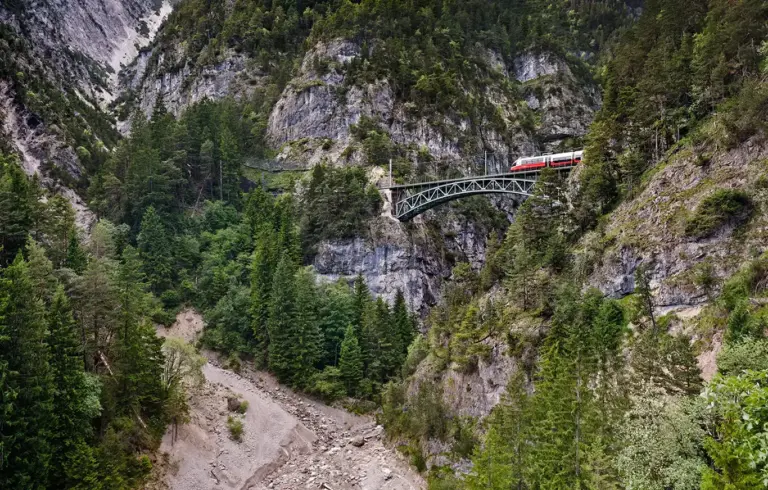
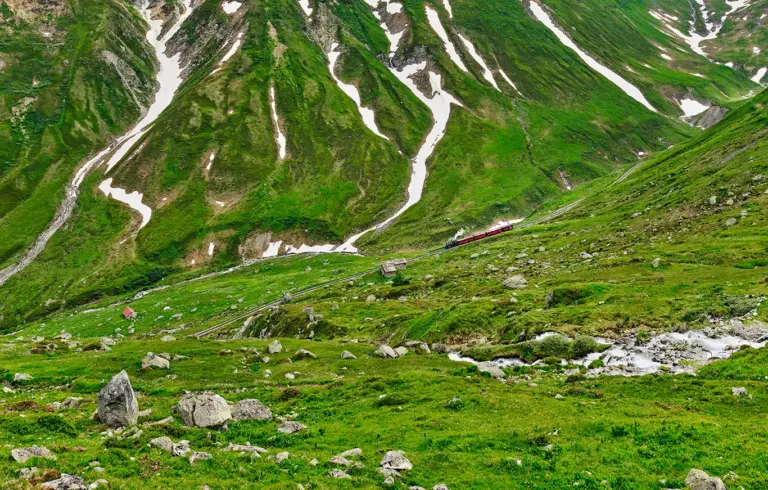
When Carl Ritter von Ghega announced his plans to build a railway over the Semmering, most people thought he was mad. The locomotives of the day lacked the power, and the gradients were simply too steep. Ghega built it anyway. Between 1848 and 1854, in record time, the first mountain railway in Europe took shape – with up to 20,000 workers, barely any machinery, and black powder as the only explosive.
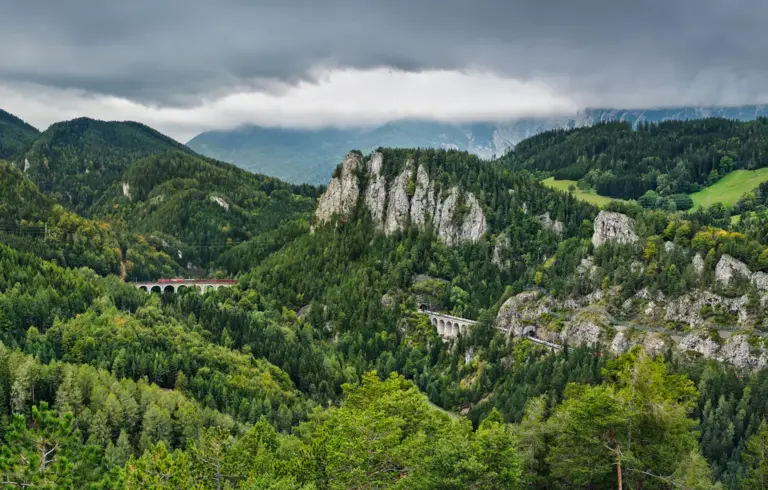
The Kalte-Rinne Viaduct is a two-storey brick arch bridge, with rosettes above the piers and stones of contrasting colour framing the arches. Not purely an engineering structure, then, but an aesthetic statement as well. This very view appeared on the Austrian 20-schilling banknote from 1986 to 2002 – alongside a portrait of Ghega. Hence the name.
In the background, the cloud-draped Rax massif; in front of it, the sheer face of the Polleroswand rising steeply from the valley. Since 1998, the Semmering Railway has been a UNESCO World Heritage Site. Standing here, one understands why.